In today’s digital world, our devices contain thousands of files, documents, photos, videos, and downloads. While many people focus on organizing their physical spaces, digital clutter often goes unnoticed. However, the way we manage our digital files can significantly impact our productivity, mental clarity, decision-making, and stress levels.
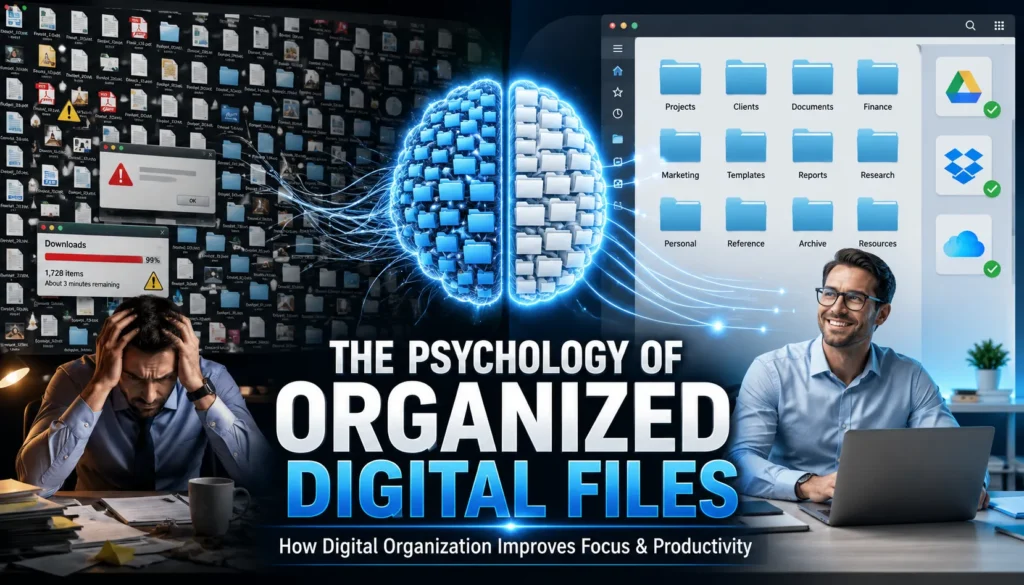
Understanding the psychology behind organized digital files reveals why a well-structured digital environment is more than just a convenience—it’s a powerful tool for improving focus, reducing anxiety, and enhancing overall efficiency.
Why Digital Organization Matters
Most people interact with digital information for several hours every day. Whether working remotely, studying, managing personal finances, or storing memories, digital files are constantly accumulating.
When files are disorganized, individuals often experience:
- Increased frustration when searching for documents
- Reduced productivity due to wasted time
- Mental fatigue from information overload
- Higher stress levels caused by digital clutter
- Difficulty maintaining focus on important tasks
An organized digital system creates a sense of control and predictability, allowing the brain to process information more efficiently.
The Psychological Impact of Digital Clutter
Cognitive Overload
The human brain has limited cognitive resources. Every time we encounter a cluttered desktop, overflowing downloads folder, or poorly named files, our brains must process additional information.
This phenomenon is known as cognitive overload.
When digital clutter accumulates, individuals may experience:
- Reduced concentration
- Decision fatigue
- Lower productivity
- Increased mental exhaustion
A clean and organized file structure minimizes unnecessary mental processing, allowing the brain to focus on meaningful tasks rather than locating information.
The Stress of Searching
Research consistently shows that searching for misplaced information creates frustration and anxiety. Even a few minutes spent hunting for a file can disrupt workflow and reduce motivation.
Repeated interruptions caused by disorganized files often lead to:
- Workflow disruption
- Lost momentum
- Increased stress
- Lower job satisfaction
An organized digital environment reduces these interruptions and helps maintain a productive mental state.
How Organized Digital Files Improve Productivity
Faster Information Retrieval
One of the biggest benefits of digital organization is the ability to locate files quickly.
When folders follow a logical structure and files are properly named, users can:
- Find documents in seconds
- Reduce repetitive searching
- Improve workflow efficiency
- Save valuable time
Small time savings accumulate significantly over weeks, months, and years.
Better Focus and Deep Work
A clutter-free digital workspace supports deep work by reducing distractions.
When users know exactly where files are stored, they spend less time navigating folders and more time completing important tasks.
This creates:
- Improved concentration
- Better task completion rates
- Higher-quality work
- Greater efficiency
Reduced Decision Fatigue
Every disorganized file represents a small unresolved decision.
Questions such as:
- Where did I save that document?
- Which version is the latest?
- What folder should this file go into?
Consume mental energy.
An established organizational system removes these micro-decisions, preserving cognitive resources for higher-value activities.
The Connection Between Organization and Control
Humans naturally seek order and predictability. Organized digital files provide a sense of control over information and responsibilities.
Psychologists often associate organized environments with:
- Reduced anxiety
- Improved confidence
- Greater self-efficacy
- Enhanced emotional well-being
When individuals know their digital assets are secure and accessible, they experience less uncertainty and greater peace of mind.
The Hidden Cost of Digital Disorganization
Lost Time
Studies suggest that professionals spend substantial amounts of time searching for information each week.
This time loss affects:
- Businesses
- Students
- Freelancers
- Remote workers
An organized filing system can reclaim hours of productivity every month.
Increased Errors
Poor file organization often leads to:
- Using outdated documents
- Duplicating work
- Missing important information
- Version control problems
A structured digital environment reduces mistakes and improves accuracy.
Reduced Professionalism
For businesses and professionals, digital organization reflects competence and reliability.
Disorganized files can lead to:
- Missed deadlines
- Delayed responses
- Poor collaboration
- Client dissatisfaction
Maintaining organized digital assets strengthens professional credibility.
Key Principles of Effective Digital File Organization
Create a Logical Folder Structure
Folders should follow a clear hierarchy that mirrors how information is used.
Example:
- Work
- Projects
- Clients
- Reports
- Personal
- Finance
- Health
- Photos
- Learning
- Courses
- Notes
- Certifications
A consistent structure reduces confusion and simplifies navigation.
Use Clear File Naming Conventions
File names should immediately communicate their purpose.
Examples:
- Marketing_Report_Q2_2026.pdf
- Website_Content_Strategy.docx
- Tax_Documents_2025.xlsx
Avoid vague names such as:
- Final.docx
- New File.pdf
- Document1.docx
Descriptive names improve searchability and reduce errors.
Archive Regularly
Not every file needs to remain in active folders.
Regular archiving helps:
- Reduce clutter
- Improve navigation
- Maintain system performance
- Keep important files visible
Archived files remain accessible without overwhelming current workspaces.
Eliminate Digital Junk
Regularly remove:
- Duplicate files
- Old downloads
- Unused screenshots
- Temporary documents
Digital decluttering creates a cleaner and more efficient environment.
The Role of Habits in Digital Organization
Successful digital organization is not a one-time project.
It depends on consistent habits such as:
- Filing documents immediately
- Following naming conventions
- Conducting monthly cleanups
- Backing up important data
- Reviewing folder structures periodically
These habits create long-term organizational stability.
Digital Organization and Mental Well-Being
A well-organized digital workspace contributes to psychological wellness in several ways.
Benefits include:
Reduced Anxiety
Knowing where important information is stored reduces uncertainty and stress.
Increased Confidence
Efficient systems create confidence in one’s ability to manage tasks and responsibilities.
Improved Motivation
A clean digital environment feels manageable and encourages productive behavior.
Greater Sense of Achievement
Maintaining order provides a feeling of accomplishment and control.
Best Practices for Maintaining Organized Digital Files
To maintain a clutter-free digital environment:
- Create a standardized folder hierarchy.
- Use consistent file naming conventions.
- Store similar files together.
- Archive inactive projects.
- Delete unnecessary files regularly.
- Back up critical data.
- Review and reorganize folders monthly.
- Keep desktops and downloads folders clean.
These practices ensure long-term efficiency and accessibility.
The Future of Digital Organization
As data volumes continue to grow, digital organization will become increasingly important. Cloud storage, artificial intelligence, and automated file management tools are helping individuals manage information more effectively.
However, technology alone cannot replace good organizational habits. A thoughtful approach to file management remains essential for maximizing productivity and reducing digital stress.
Conclusion
The psychology of organized digital files extends far beyond simple file management. A structured digital environment reduces cognitive overload, minimizes stress, improves productivity, and supports mental well-being. By creating logical folder systems, using consistent naming conventions, and maintaining regular organizational habits, individuals can transform their digital spaces into powerful tools for efficiency and focus.
In an era where information is constantly expanding, organized digital files are not merely a convenience—they are a critical component of personal and professional success.