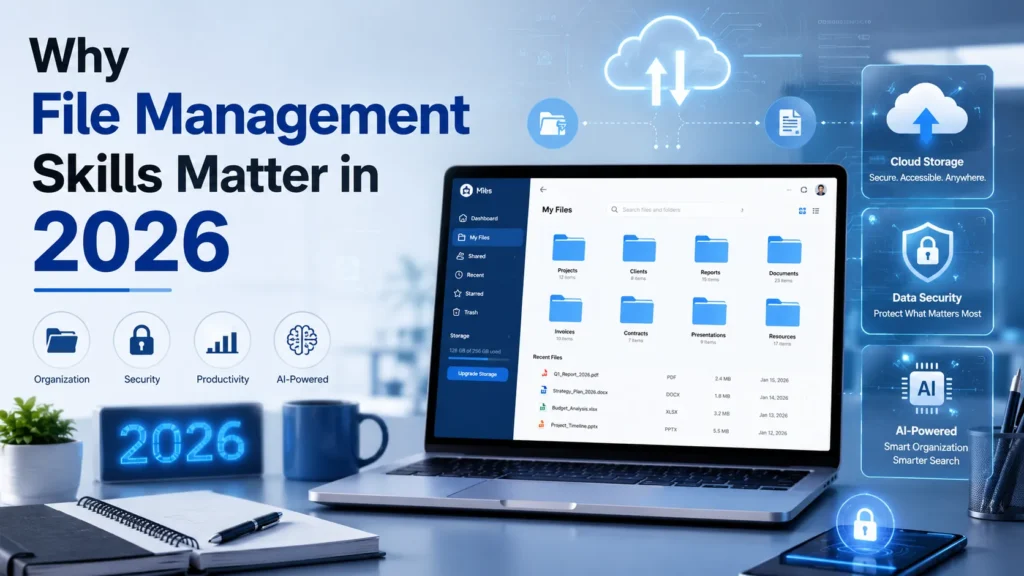
In today’s digital-first world, file management has become one of the most important professional and personal productivity skills. As businesses continue to embrace cloud computing, remote work, artificial intelligence, and digital collaboration, managing files efficiently is no longer optional. In 2026, individuals who can organize, store, secure, and retrieve digital files quickly have a significant advantage over those who struggle with digital clutter.
Whether you’re a student, freelancer, office employee, entrepreneur, or IT professional, strong file management skills can save time, improve productivity, enhance security, and reduce stress. This article explores why file management skills matter in 2026 and how mastering them can improve your digital workflow.
What Are File Management Skills?
File management skills refer to the ability to create, organize, store, locate, protect, and maintain digital files effectively. These skills include:
- Organizing files into logical folders
- Using consistent file naming conventions
- Managing cloud storage systems
- Backing up important data
- Removing duplicate and outdated files
- Protecting sensitive information
- Sharing files securely
- Maintaining version control
Good file management ensures that important documents are always accessible when needed.
The Growing Importance of Digital Organization
The amount of digital data created every day continues to grow at an unprecedented rate. Employees and businesses generate thousands of documents, spreadsheets, presentations, images, videos, and reports annually.
Without proper organization, digital files become difficult to find, leading to:
- Lost productivity
- Missed deadlines
- Duplicate work
- Increased frustration
- Security risks
In 2026, digital organization is a critical skill that helps individuals work smarter rather than harder.
Increased Productivity and Time Savings
One of the biggest benefits of file management is improved productivity.
Research consistently shows that workers spend significant amounts of time searching for misplaced documents. Poor file organization forces employees to dig through folders, emails, and cloud storage systems to locate information.
Effective file management allows users to:
- Find documents instantly
- Reduce workflow interruptions
- Complete tasks faster
- Focus on meaningful work
- Minimize repetitive searching
Even saving a few minutes each day can add up to dozens of productive hours over the course of a year.
Better Collaboration in Remote and Hybrid Work Environments
Remote and hybrid work models remain common in 2026. Teams often collaborate across different locations, time zones, and devices.
Proper file management supports seamless collaboration by:
- Keeping shared folders organized
- Ensuring everyone accesses the latest version
- Preventing duplicate documents
- Reducing communication errors
- Simplifying project management
When files are stored in structured systems, team members can work together more efficiently without confusion or delays.
Enhanced Data Security and Privacy
Cybersecurity threats continue to evolve, making file security more important than ever.
Poor file management can expose organizations to:
- Data breaches
- Unauthorized access
- Accidental file sharing
- Compliance violations
- Financial losses
Strong file management practices help protect sensitive information through:
- Access controls
- Folder permissions
- Encrypted storage
- Secure backups
- Regular file audits
In 2026, digital security starts with proper file organization and control.
The Role of Cloud Storage in Modern File Management
Cloud platforms have transformed how people store and access files.
Popular cloud storage solutions allow users to:
- Access documents from anywhere
- Synchronize files across devices
- Collaborate in real time
- Create automatic backups
- Recover lost files
However, cloud storage can quickly become chaotic without effective organization. File management skills ensure cloud systems remain efficient, searchable, and secure.
Reduced Risk of Data Loss
Accidental deletion, hardware failure, ransomware attacks, and system crashes can result in significant data loss.
Good file management includes:
- Regular backups
- File versioning
- Recovery planning
- Archive management
Having a structured backup strategy reduces downtime and ensures critical information remains protected.
Improved Professionalism in the Workplace
Employers increasingly value digital literacy skills, including file management.
Professionals with strong file organization skills are often viewed as:
- More reliable
- Better organized
- More efficient
- Detail-oriented
- Easier to work with
The ability to quickly locate documents and maintain organized digital systems contributes to stronger workplace performance and career growth.
Supporting Artificial Intelligence and Automation
Artificial intelligence tools are becoming central to business operations in 2026. However, AI systems perform best when data is well organized.
Structured file management helps AI tools:
- Access accurate information
- Process documents efficiently
- Generate better insights
- Improve search capabilities
- Reduce data duplication
Organizations that maintain organized digital environments can maximize the benefits of AI-powered technologies.
Easier Compliance and Record Keeping
Many industries must comply with regulations regarding data retention, privacy, and record management.
Examples include:
- Healthcare records
- Financial documents
- Legal contracts
- Employee information
- Customer data
Proper file management makes it easier to:
- Meet compliance requirements
- Locate records during audits
- Track document histories
- Maintain accurate archives
Failure to organize records properly can result in penalties and legal complications.
Essential File Management Best Practices for 2026
To improve your file management skills, follow these best practices:
Create a Consistent Folder Structure
Develop a logical hierarchy that makes files easy to locate. Use categories, projects, departments, or dates to organize content.
Use Clear File Naming Conventions
Choose descriptive names that include relevant information such as project names, dates, or version numbers.
Example:
Project_Report_2026_Final.docx
Eliminate Duplicate Files
Regularly review storage locations and remove unnecessary duplicates to save space and reduce confusion.
Backup Important Data
Use both cloud-based and local backup solutions to protect critical files.
Archive Old Documents
Move inactive files to archive folders instead of deleting them immediately.
Apply Access Controls
Restrict access to sensitive files and ensure only authorized users can view confidential information.
Conduct Regular File Audits
Review folders periodically to maintain organization and identify outdated content.
Why Students Need File Management Skills
Students generate large amounts of digital content, including:
- Assignments
- Research papers
- Lecture notes
- Presentations
- Project files
Strong file management skills help students:
- Meet deadlines
- Avoid losing coursework
- Improve study efficiency
- Prepare for future careers
Developing these habits early creates long-term professional advantages.
Why Businesses Prioritize File Management
Organizations rely heavily on information management to operate efficiently.
Poor file management can lead to:
- Lost revenue
- Delayed projects
- Security incidents
- Reduced employee productivity
Businesses that invest in file management training often experience improved operational efficiency, stronger collaboration, and lower administrative costs.
The Future of File Management Beyond 2026
File management will continue evolving alongside emerging technologies such as:
- Artificial intelligence
- Machine learning
- Intelligent search systems
- Automated classification
- Smart document management platforms
While technology can automate many processes, human file management skills remain essential for creating organized systems and maintaining data quality.
Conclusion
File management skills are more valuable than ever in 2026. As digital information continues to grow, the ability to organize, secure, retrieve, and manage files efficiently directly impacts productivity, collaboration, cybersecurity, and professional success.
Whether you’re a student managing coursework, an employee handling business documents, or an entrepreneur running a company, strong file management habits can save time, reduce stress, and improve performance. Investing in these skills today will help you stay productive and competitive in an increasingly digital future.