Images play a crucial role in modern websites, improving user engagement, enhancing visual appeal, and supporting content. However, search engines cannot interpret images the same way humans do. This is where image alt text becomes essential.
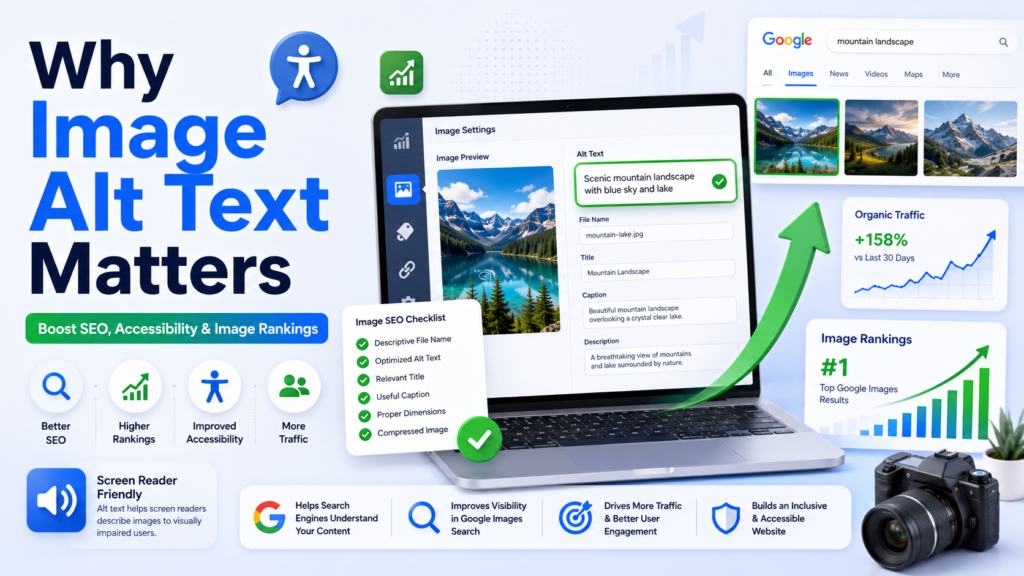
Image alt text, also known as alternative text, helps search engines understand image content while improving website accessibility for users with visual impairments. Properly optimized alt text can contribute to better SEO performance, higher rankings in Google Images, and an improved user experience.
In this guide, you’ll learn why image alt text matters, how it impacts SEO, and the best practices for writing effective alt text.
What Is Image Alt Text?
Alt text is an HTML attribute added to image tags that describes the content and purpose of an image.
Example:
<img src="image-seo-guide.jpg" alt="SEO expert optimizing website images for better search rankings">
The alt attribute provides a textual description that can be read by screen readers and used by search engines to understand image content.
Why Image Alt Text Is Important
Alt text serves multiple purposes beyond SEO. It improves accessibility, enhances user experience, and helps search engines index images accurately.
The primary benefits include:
- Better accessibility for visually impaired users
- Improved image search rankings
- Enhanced search engine understanding
- Support for website compliance standards
- Better user experience when images fail to load
These advantages make alt text a critical component of image optimization.
How Alt Text Helps SEO
Search engines rely on text signals to understand web content.
Since search engines cannot fully interpret every image, alt text provides valuable context that helps them determine:
- What the image contains
- How the image relates to the page
- Which keywords the image may be relevant for
Well-written alt text can improve visibility in:
- Google Images
- Featured snippets
- Visual search results
- Traditional organic search results
When combined with other image SEO practices, alt text can significantly increase organic traffic.
Alt Text Improves Accessibility
Accessibility is one of the most important reasons for using alt text.
Screen readers use alt text to describe images to users who are blind or visually impaired. Without alt text, these users may miss important information contained within images.
For example:
Poor Accessibility
alt=”image”
Better Accessibility
alt=”Digital marketing specialist analyzing website traffic and SEO performance”
The second example provides meaningful context that improves the browsing experience.
Helps Images Rank in Google Images
Google Images uses various signals to understand and rank images.
These signals include:
- File names
- Alt text
- Captions
- Surrounding content
- Structured data
Alt text provides a direct description of the image, making it easier for Google to categorize and display it for relevant search queries.
Proper image optimization can lead to:
- Increased impressions
- Higher click-through rates
- More website traffic
- Improved brand visibility
Provides Context When Images Fail to Load
Sometimes images fail to load due to:
- Slow internet connections
- Broken image links
- Server issues
- Browser restrictions
When this happens, browsers display the image’s alt text instead.
This allows users to understand the missing content and maintain a positive browsing experience.
Supports Better User Experience
User experience is an important factor in website success.
Alt text contributes by:
- Improving accessibility
- Providing context for images
- Enhancing content understanding
- Supporting assistive technologies
A website that serves all users effectively is more likely to achieve long-term SEO success.
Best Practices for Writing Alt Text
Creating effective alt text requires balancing clarity, relevance, and SEO.
Follow these best practices:
Describe the Image Accurately
Focus on what is actually visible in the image.
Good example:
alt=”Woman using a laptop to optimize website images for SEO”
Avoid vague descriptions such as:
alt=”photo”
Keep It Concise
Most alt text should be brief yet descriptive.
Aim for:
- Clear descriptions
- Natural language
- Relevant details
Avoid unnecessary words that do not add value.
Use Keywords Naturally
Including keywords can help with SEO, but only when relevant.
Example:
alt=”How to optimize image alt text for better Google Images rankings”
Do not force keywords into every image description.
Avoid Keyword Stuffing
Keyword stuffing creates a poor user experience and may reduce the effectiveness of alt text.
Bad example:
alt=”image alt text SEO image SEO Google Images image optimization image ranking”
Good example:
alt=”SEO professional writing optimized image alt text for a website”
Natural descriptions work best.
Don’t Start with ‘Image of’
Screen readers already identify images.
Avoid phrases like:
- Image of
- Picture of
- Photo of
Instead, directly describe the image.
Common Alt Text Mistakes
Many websites make avoidable alt text errors.
Common mistakes include:
Leaving Alt Text Empty
Missing alt text provides no information to users or search engines.
Using Generic Descriptions
Examples:
- image
- photo
- screenshot
These descriptions offer little value.
Keyword Overuse
Excessive keyword repetition can make alt text difficult to understand.
Writing Long Paragraphs
Alt text should be concise and focused.
Ignoring Accessibility
Alt text should prioritize helping users understand the image, not just improving rankings.
Examples of Good and Bad Alt Text
Bad Example
alt=”SEO”
Better Example
alt=”SEO specialist improving image optimization for higher Google rankings”
Bad Example
alt=”marketing marketing SEO marketing digital marketing SEO services”
Better Example
alt=”Digital marketing dashboard showing website traffic and search rankings”
Clear and descriptive text always performs better.
How Alt Text Fits Into an Overall Image SEO Strategy
Alt text is only one part of image optimization.
For maximum results, combine it with:
- Optimized file names
- High-quality images
- Image compression
- Responsive design
- Structured data
- Image sitemaps
- Relevant page content
Together, these factors help improve image rankings and overall website performance.
Does Alt Text Directly Affect Rankings?
Alt text alone will not guarantee top rankings.
However, it helps search engines understand image content more effectively.
When combined with strong content and technical SEO, alt text becomes an important ranking signal that contributes to better visibility in image search results.
Conclusion
Understanding why image alt text matters is essential for anyone focused on SEO, accessibility, and user experience. Alt text helps search engines interpret images, improves rankings in Google Images, supports visually impaired users, and provides valuable context when images fail to load.
By writing clear, descriptive, and keyword-relevant alt text, website owners can improve both accessibility and search visibility. As part of a comprehensive image SEO strategy, optimized alt text can help drive more organic traffic and create a better experience for every visitor.