Search engine optimization (SEO) is one of the biggest factors behind a successful blog. You can write the best content on the internet, but if your blog has SEO mistakes, your articles may never reach the right audience. Many bloggers unknowingly make errors that prevent their pages from ranking on Google, leading to lower traffic and fewer conversions.
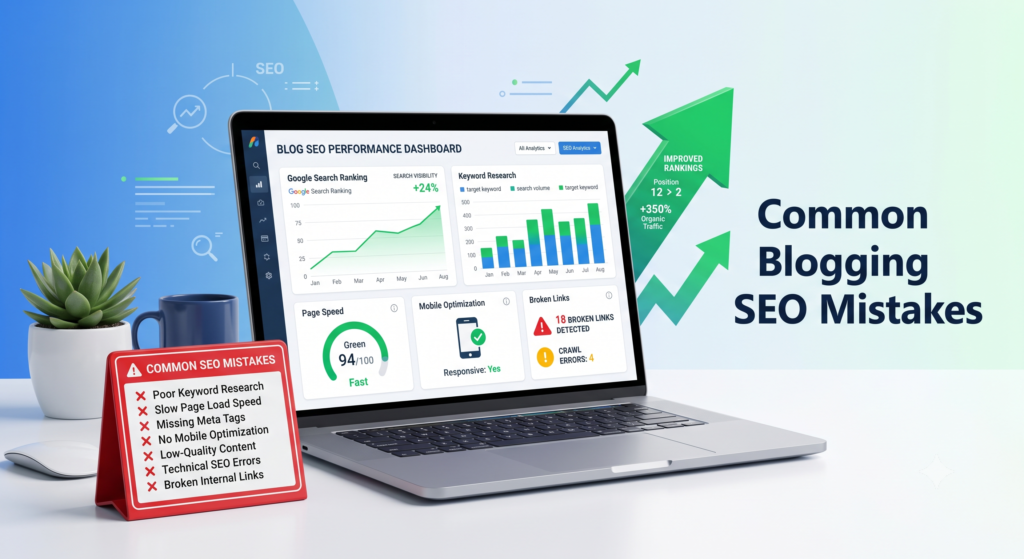
In this comprehensive guide, you’ll learn the most common blogging SEO mistakes, why they matter, and practical ways to fix them. Whether you’re a beginner or an experienced blogger, avoiding these mistakes can significantly improve your search rankings and organic traffic.
Why Avoiding Blogging SEO Mistakes Is Important
SEO mistakes can negatively impact your website in several ways:
- Lower search engine rankings
- Reduced organic traffic
- Poor user experience
- Lower click-through rates (CTR)
- Higher bounce rates
- Slower website growth
By fixing these issues, your blog becomes more search-engine friendly and provides a better experience for readers.
1. Ignoring Keyword Research
One of the biggest blogging mistakes is publishing articles without proper keyword research.
Many bloggers write about topics they think people search for instead of using actual search data.
How to Fix It
- Use keyword research tools.
- Target keywords with good search volume and achievable competition.
- Focus on user intent.
- Include long-tail keywords naturally.
Example:
Instead of:
SEO
Use:
Common Blogging SEO Mistakes
or
SEO mistakes beginners should avoid
2. Keyword Stuffing
Years ago, repeating keywords worked. Today, keyword stuffing can harm rankings.
Bad Example:
Blogging SEO mistakes are blogging SEO mistakes because blogging SEO mistakes affect blogging SEO mistakes…
Google easily detects unnatural writing.
Best Practice
- Use keywords naturally.
- Add related phrases.
- Write for humans first.
- Maintain readability.
3. Writing Thin Content
Publishing 300–500 word articles rarely provides enough value unless the topic is very specific.
Google prefers comprehensive content that answers users’ questions completely.
How to Improve
- Cover the topic in depth.
- Add examples.
- Include FAQs.
- Use actionable advice.
- Keep content updated.
4. Poor Heading Structure
Many bloggers misuse headings.
Common mistakes include:
- Multiple H1 tags
- Skipping heading levels
- Using headings only for styling
Correct Heading Structure
- H1 → Article Title (only one)
- H2 → Main Sections
- H3 → Subtopics
- H4 → Supporting Details (if needed)
Proper structure helps both readers and search engines understand your content.
5. Missing Meta Title and Meta Description
Many blogs publish pages without optimized metadata.
Your meta title and description influence click-through rate.
Best Practices
Meta Title
- Include the primary keyword.
- Keep it under 60 characters.
Meta Description
- Keep it between 150–160 characters.
- Include the target keyword.
- Encourage clicks.
6. Ignoring Search Intent
Ranking isn’t only about keywords.
Google wants content that satisfies what users actually want.
There are four common search intents:
Informational
Example:
How to improve blog SEO
Navigational
Example:
Text to PDF converter
Commercial
Example:
Best blogging platforms
Transactional
Example:
Buy premium SEO tools
Always match your content to the searcher’s intent.
7. Not Optimizing Images
Large, unoptimized images slow down websites.
Missing image optimization also means losing opportunities to rank in Google Images.
Image SEO Checklist
- Compress images
- Use descriptive filenames
- Add ALT text
- Use modern formats like WebP
- Enable lazy loading
8. Slow Website Speed
Page speed is a ranking factor and directly affects user experience.
A slow blog increases bounce rates.
Improve Website Speed
- Compress images
- Minify CSS and JavaScript
- Use caching
- Choose quality hosting
- Reduce unnecessary plugins
9. Not Using Internal Links
Internal linking is one of the easiest SEO wins.
Benefits include:
- Better crawling
- Higher page authority
- Increased page views
- Improved user navigation
Always link to relevant articles naturally.
10. Broken Links
Broken links create a poor user experience.
They also waste crawl budget.
Fix Them
- Regularly audit your website.
- Replace outdated links.
- Redirect removed pages when appropriate.
11. Duplicate Content
Publishing identical or highly similar content can confuse search engines.
Duplicate content may come from:
- Copying articles
- Similar category pages
- Multiple URLs showing the same page
Solution
- Write original content.
- Use canonical URLs where necessary.
- Avoid copying from other websites.
12. Ignoring Mobile Optimization
Most users browse from smartphones.
Google primarily uses mobile-first indexing.
Mobile SEO Tips
- Use responsive design.
- Improve loading speed.
- Make buttons easy to tap.
- Avoid intrusive pop-ups.
13. Forgetting Technical SEO
Technical SEO helps search engines crawl and index your website.
Key areas include:
- XML sitemap
- Robots.txt
- HTTPS
- Canonical tags
- Structured data
- Crawl error fixes
14. Not Updating Old Content
Older articles gradually lose rankings.
Refreshing content signals relevance.
Update:
- Statistics
- Screenshots
- Internal links
- Keywords
- Examples
- FAQs
Regular updates often improve rankings without writing a new article.
15. Ignoring User Experience (UX)
SEO isn’t only about search engines.
A good user experience improves engagement metrics.
Improve UX by:
- Using short paragraphs
- Adding bullet points
- Using readable fonts
- Improving navigation
- Reducing clutter
Readers who stay longer send positive engagement signals.
Blogging SEO Best Practices Checklist
Before publishing an article, ensure you have:
- Completed keyword research
- Used only one H1 heading
- Added descriptive H2 and H3 headings
- Written valuable, original content
- Optimized images
- Added internal links
- Included external authority links where relevant
- Written an optimized meta title
- Written a compelling meta description
- Improved page speed
- Checked mobile responsiveness
- Proofread the article
- Updated schema markup where applicable
Frequently Asked Questions
What is the biggest SEO mistake bloggers make?
Ignoring keyword research is one of the most common SEO mistakes. Without understanding what users search for, it’s difficult to rank for relevant queries.
Does keyword stuffing still work?
No. Keyword stuffing can hurt rankings because search engines prioritize natural, user-focused content over repetitive keyword usage.
How many headings should a blog post have?
A blog post should have only one H1 heading. Use H2 headings for main sections and H3 headings for supporting topics to create a logical content structure.
How often should I update old blog posts?
Review important articles every 6–12 months or whenever significant changes occur in your niche. Updating outdated information can help maintain or improve search rankings.
Does website speed affect SEO?
Yes. Faster websites provide a better user experience, reduce bounce rates, and are more likely to perform well in search engine results.
Final Thoughts
Avoiding common blogging SEO mistakes is just as important as creating high-quality content. Strong keyword research, a clear heading structure, fast page speed, mobile optimization, internal linking, and valuable content all work together to improve your website’s visibility in search results.
Instead of chasing shortcuts, focus on creating helpful, well-structured articles that genuinely solve readers’ problems. Consistently applying SEO best practices will build long-term organic traffic and help your blog achieve sustainable growth.