Students deal with hundreds of files every year — notes, PDFs, assignments, screenshots, presentations and study materials. Without a proper system, files quickly become messy and difficult to find. In this guide, you will learn the best file organization system for students to stay productive and stress-free.
Quick Answer
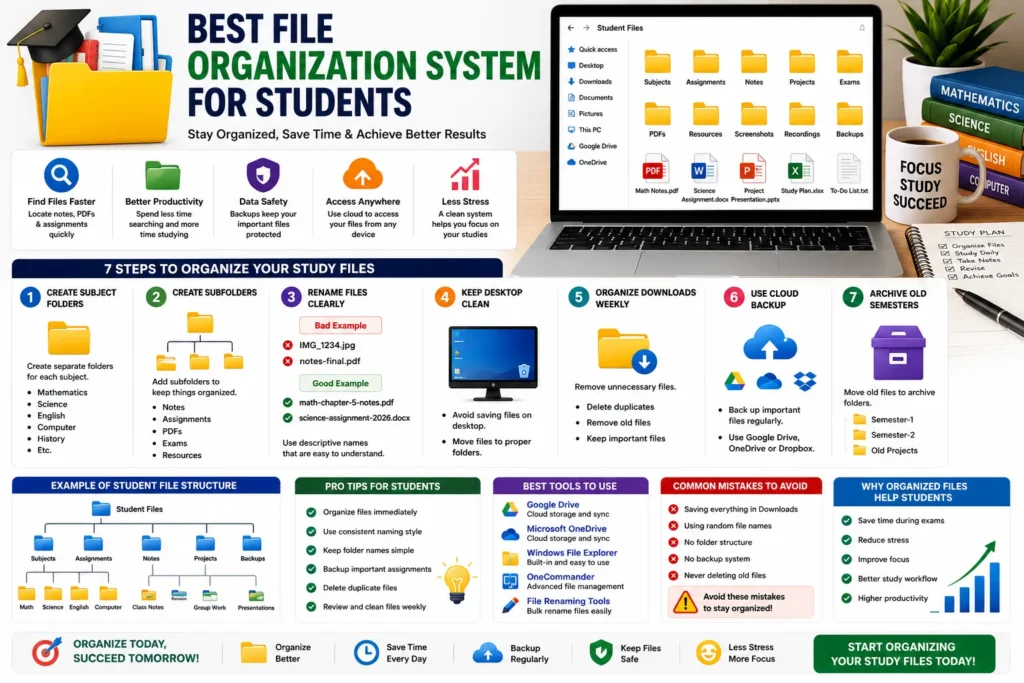
The best file organization system for students uses subject-based folders, clear file names, cloud backups and regular cleanup routines.
Why File Organization Is Important for Students
- ✔ Faster access to study material
- ✔ Better productivity
- ✔ Less stress during exams
- ✔ Easier assignment management
- ✔ Better storage organization
- ✔ Improved focus and workflow
Common Problems Students Face
Many students save everything randomly on desktop or Downloads folder.
Common issues include:
- ❌ Lost assignments
- ❌ Duplicate notes
- ❌ Messy screenshots
- ❌ Random file names
- ❌ Difficulty finding PDFs
👉 A good organization system solves these problems.
Best File Organization System for Students
1. Create Subject-Based Folders
Start by creating separate folders for each subject.
Study Files/
│
├── Mathematics/
├── Science/
├── English/
├── Computer/
└── Projects/
👉 This keeps study material organized.
2. Create Subfolders Inside Subjects
Use smaller sections for assignments and notes.
Mathematics/
│
├── Notes/
├── Assignments/
├── PDFs/
└── Exams/
👉 Easy to manage during exams.
3. Rename Files Clearly
Avoid confusing names like:
IMG_5589.jpg
notes-final.pdf
newdoc.docx
Use descriptive names instead:
math-chapter-5-notes.pdf
science-assignment-2026.docx
4. Keep Desktop Clean
Do not store all study files directly on desktop.
👉 Use folders properly.
5. Organize Downloads Folder Weekly
Students download many PDFs and notes.
Delete:
- ✔ Duplicate files
- ✔ Old downloads
- ✔ Temporary files
6. Use Cloud Backup
Important study material should always have backup copies.
Best options:
- ✔ Google Drive
- ✔ OneDrive
- ✔ Dropbox
👉 Prevents data loss.
7. Archive Old Semester Files
Move completed semester files into archive folders.
Archive/
│
├── Semester-1/
├── Semester-2/
└── Old Projects/
Example of a Student File System
Student Files/
│
├── Subjects/
│   ├── Mathematics/
│   ├── English/
│   └── Science/
│
├── Assignments/
├── Projects/
├── Notes/
└── Backups/
Pro Tips for Students
- ✔ Keep folder names simple
- ✔ Organize notes immediately
- ✔ Backup important assignments
- ✔ Use clear naming systems
- ✔ Delete duplicate files regularly
- ✔ Keep desktop minimal
Best Tools for Student File Organization
- ✔ Google Drive
- ✔ Microsoft OneDrive
- ✔ Windows File Explorer
- ✔ OneCommander
- ✔ File renaming tools
Why Organized Study Files Improve Productivity
Organized files help students study faster and reduce stress before exams. Instead of wasting time searching for notes, students can focus directly on learning.
Good organization also improves assignment submission workflow.
Common Mistakes to Avoid
- ❌ Saving everything in Downloads
- ❌ Random file names
- ❌ No backup system
- ❌ Mixing subjects together
- ❌ Never deleting old files
Use Our Free File Renaming Tool
If you want to organize and rename study files faster, use our free tool:
- ✔ Bulk renaming
- ✔ Smart file naming
- ✔ Instant preview
- ✔ No upload required
FAQ
Q1: What is the best way to organize study files?
Using subject-based folders and clear file names.
Q2: Should students use cloud backups?
Yes, backups prevent important data loss.
Q3: Why are student files usually messy?
Because files are downloaded daily without organization.
Q4: How often should students clean files?
Weekly cleanup is recommended.
Conclusion
The best file organization system for students uses structured folders, proper naming and regular cleanup habits. Organized files improve productivity, reduce stress and make studying easier.